
The U.S. State Quarters program, launched in 1999, transformed everyday pocket change into a nationwide collecting phenomenon. For ten years, the United States Mint released quarters honoring each of the fifty states, celebrating history, culture, and regional identity through unique designs. Billions of these coins entered circulation, making most state quarters common and worth only face value. Yet within this massive production run, a small number of rare varieties and minting errors slipped through. These overlooked coins now represent some of the most exciting hidden values in modern American numismatics.
For collectors, rare state quarters offer the perfect blend of accessibility and discovery. They are modern enough to still appear in circulation, yet scarce enough to command impressive premiums. This guide explores the top three rare state quarters that have proven their worth, explaining what makes them special, how to identify them, and why they remain highly sought after.
Why Rare State Quarters Matter to Collectors
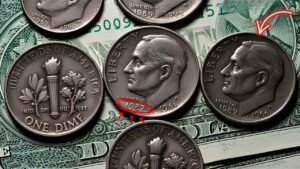
State quarters are appealing because they are familiar, affordable, and rich in variety. Unlike older classic coins, collectors do not need decades of experience or large budgets to get started. Error varieties, in particular, add excitement to the hunt. These coins were not intentionally designed to be rare, which makes discovering one feel like uncovering a hidden treasure.
The value of rare state quarters is driven by three key factors: scarcity, visibility of the error, and collector demand. When an error is easy to identify and tied to a popular design, prices can rise quickly and remain strong over time.
1. 2004-D Wisconsin Extra Leaf Quarter
The most famous and valuable state quarter error is the 2004-D Wisconsin quarter with the “Extra Leaf” variety. The standard Wisconsin design features an ear of corn, cheese, and a cow, symbolizing the state’s agricultural heritage. However, some quarters struck at the Denver Mint display an extra leaf on the corn stalk.
There are two recognized varieties: the Extra Leaf Low and the Extra Leaf High. Both resulted from a die modification error, possibly caused during die polishing or accidental tooling. Only a limited number entered circulation before the error was discovered.
These quarters quickly gained attention because the extra leaf is clearly visible without specialized equipment. In circulated condition, they can sell for hundreds of dollars. High-grade, professionally certified examples have reached into the thousands. The Wisconsin Extra Leaf quarter is widely regarded as the crown jewel of the State Quarters program and remains a must-have for serious collectors.
2. 1999 Delaware “Spitting Horse” Quarter
As the first coin released in the State Quarters series, the 1999 Delaware quarter already holds historical importance. The design features Caesar Rodney riding horseback, commemorating his famous ride to the Continental Congress. A rare die crack variety created what collectors call the “Spitting Horse” error.
This error appears as a raised line extending from the horse’s mouth, giving the illusion that the horse is spitting. The crack varies in size and visibility, which directly affects value. While not as rare as the Wisconsin Extra Leaf, the Spitting Horse quarter is highly collectible due to its distinctive appearance and its status as part of the inaugural state issue.
Values range from modest premiums to several hundred dollars, depending on condition and the prominence of the die crack. Collectors appreciate this coin because it combines a visible mint error with strong historical appeal.
3. 2005 Minnesota Extra Tree Quarter
The 2005 Minnesota quarter depicts a serene scene of a lake, a loon, and a group of trees, representing the state’s natural beauty. Some examples show an additional tree caused by die doubling, creating the “Extra Tree” variety. Multiple variations exist, with some showing a faint extra outline and others displaying a more pronounced doubling effect.
This error is especially attractive to collectors because it blends naturally into the design, making it subtle yet intriguing. The Extra Tree quarter is rarer than it initially appears, and values can reach several hundred dollars for high-grade examples. Coins with strong doubling and professional certification are the most desirable.
What Makes These Quarters Valuable
The value of these three quarters lies in their combination of rarity and recognizability. Unlike microscopic errors that require expert analysis, these varieties can be identified with careful inspection. Demand is further driven by the popularity of the State Quarters program itself, which introduced millions of people to coin collecting.
Condition plays a major role in determining price. Coins that show minimal wear, sharp details, and original surfaces are worth significantly more. Professionally graded examples consistently achieve the highest prices at auction.
How to Identify Rare State Quarters
Collectors searching for valuable state quarters should examine coins carefully under good lighting. A magnifying glass can help reveal extra leaves, die cracks, or doubled elements. Comparing suspected errors to verified images from reputable numismatic references is essential.
Authentication is critical. Professional grading services can confirm whether a coin is a genuine error or simply post-mint damage. Certification not only protects collectors but also enhances resale value.
Preserving Hidden Value
Once a rare quarter is identified, proper care is essential. Coins should be stored in protective holders to prevent scratches and environmental damage. Cleaning should always be avoided, as it can permanently reduce value. Minimal handling and professional grading are the best ways to preserve long-term worth.
The Enduring Appeal of State Quarters
The State Quarters program remains one of the most influential initiatives in modern U.S. coinage. It sparked widespread interest, educated the public about numismatics, and created opportunities for discovery that still exist today. Rare varieties like the Wisconsin Extra Leaf, Delaware Spitting Horse, and Minnesota Extra Tree demonstrate that even modern coins can hold significant hidden value.
Conclusion
While most state quarters are common, a select few have become highly valuable due to rare minting errors and strong collector demand. The 2004-D Wisconsin Extra Leaf quarter, the 1999 Delaware Spitting Horse quarter, and the 2005 Minnesota Extra Tree quarter stand out as the top three state quarters worth collecting for hidden value. They prove that remarkable treasures can still be found in everyday change. For collectors, these coins embody the excitement of discovery and the enduring appeal of American numismatics.