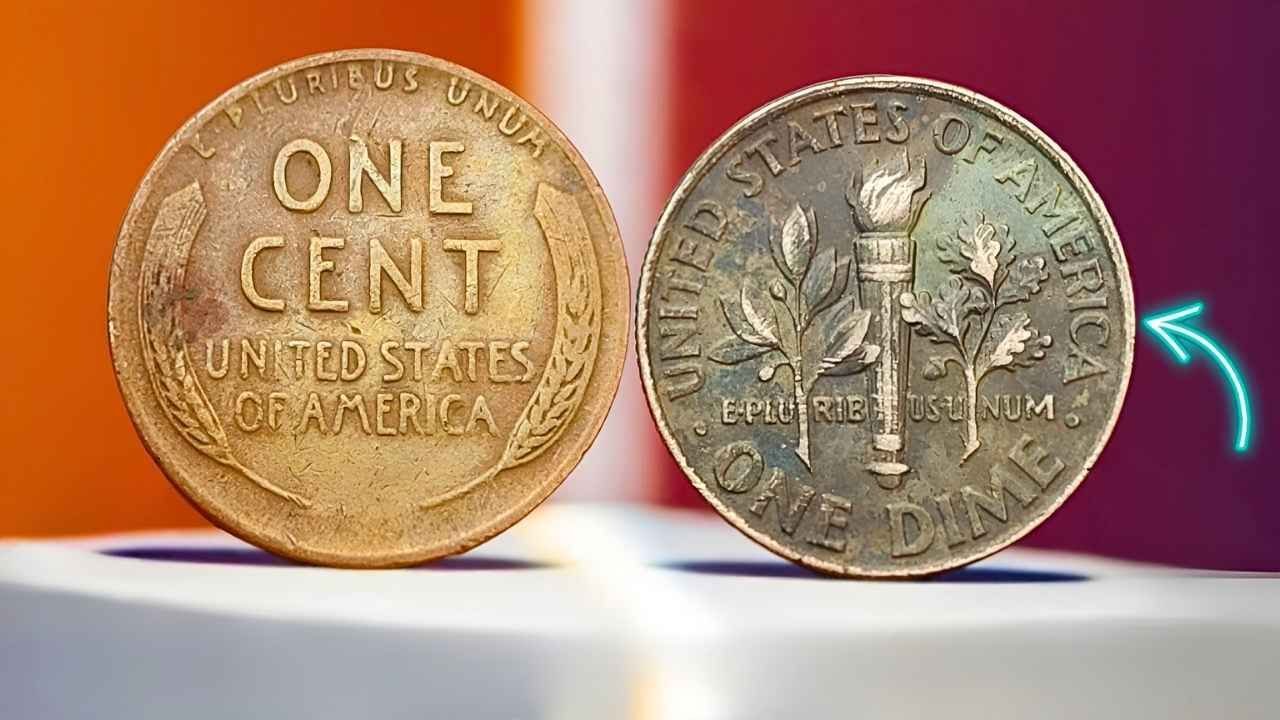
Coin collecting has long appealed to individuals who appreciate history, craftsmanship, and long-term value. Among the vast range of U.S. coins, Roosevelt dimes and Lincoln Wheat pennies occupy a special place. Although these coins were once everyday currency, select issues have evolved into some of the most valuable and desirable collectibles in American numismatics. Their appeal lies in rarity, minting errors, condition, and historical importance.
This guide explores the top ten most valuable Roosevelt dimes and Wheat pennies, offering collectors a clear understanding of what makes these coins exceptional and why they continue to command strong interest in the market.
The Legacy of the Roosevelt Dime
Introduced in 1946, the Roosevelt dime was designed to honor President Franklin D. Roosevelt following his death. Created by John R. Sinnock, the coin replaced the Mercury dime and symbolized Roosevelt’s leadership during the Great Depression and World War II. While most Roosevelt dimes remain common, a handful of rare varieties and minting errors have elevated certain issues into elite collectible status.
Rare and Valuable Roosevelt Dimes
1968 No-S Proof Dime
The 1968 No-S proof dime is one of the rarest modern U.S. coins. Produced at the San Francisco Mint, it was mistakenly struck without the “S” mint mark. Only a very small number are known to exist, making it a cornerstone rarity for advanced collectors. Its value can reach well into five figures depending on condition.
1970 No-S Proof Dime
Another highly prized mint error, the 1970 No-S proof dime shares the same missing mint mark issue. The error was quickly corrected, leaving only a limited number in circulation. Collectors value this coin for its scarcity and its place in the short list of major proof mint errors.
1975 No-S Proof Dime
The 1975 No-S proof dime is among the most famous Roosevelt dime errors. Unlike other years, no proof dimes were officially supposed to be released without a mint mark, making this error particularly dramatic. Its rarity ensures consistent demand and premium prices at auctions.
1982 No-P Dime
In 1982, a small batch of dimes was struck at the Philadelphia Mint without the “P” mint mark. This error created one of the most well-known modern circulation rarities. The 1982 No-P dime remains popular with collectors due to its accessibility compared to proof-only errors, yet it still commands strong value.
1996-W Roosevelt Dime
Issued to celebrate the 50th anniversary of the Roosevelt dime, the 1996-W was struck at the West Point Mint and included only in special sets. While not an error coin, its limited mintage makes it highly collectible. It is often sought by collectors aiming to complete a comprehensive Roosevelt dime collection.
The Enduring Appeal of Wheat Pennies
The Lincoln Wheat penny, minted from 1909 to 1958, remains one of the most recognizable coins in U.S. history. Featuring Abraham Lincoln on the obverse and wheat stalks on the reverse, it marked the first time a real person appeared on American coinage. Certain Wheat pennies have become legendary due to low mintages, errors, or historical significance.
Rare and Valuable Wheat Pennies
1909-S VDB Penny
The 1909-S VDB is the most famous Wheat penny. Minted in San Francisco, it bears the initials of designer Victor David Brenner on the reverse. Public controversy over the initials led to their removal, resulting in a limited production run. This coin is a cornerstone of Lincoln cent collecting and commands exceptionally high prices in all grades.
1914-D Penny
With a low mintage from the Denver Mint, the 1914-D Wheat penny is a key date in the series. Its scarcity becomes especially pronounced in higher grades, making it one of the most sought-after coins among serious collectors.
1922 No-D Penny
In 1922, pennies were struck only at the Denver Mint. Due to worn dies, some coins were produced without a visible “D” mint mark. These No-D pennies are rare and highly valuable, particularly examples with strong details and minimal wear.
1931-S Penny
The 1931-S Wheat penny had one of the lowest mintages of the series due to reduced demand during the Great Depression. While more affordable than earlier key dates, it remains a critical piece for collectors completing a full Wheat penny set.
1955 Doubled Die Penny
The 1955 doubled die penny is one of the most visually striking error coins in American history. The dramatic doubling on the obverse lettering is clearly visible to the naked eye. Its unmistakable appearance and limited number of examples have made it a numismatic icon, often selling for thousands of dollars.
What Determines Coin Value
Several factors influence the value of rare Roosevelt dimes and Wheat pennies. Rarity is paramount, as coins with low mintages or unique errors naturally command higher prices. Condition is equally important, with uncirculated or professionally graded coins achieving significant premiums. Mint errors and varieties add another layer of desirability, while historical relevance strengthens long-term demand.
Smart Collecting Strategies
Collectors interested in these high-value coins should prioritize education and authenticity. Counterfeit examples exist, particularly for famous coins like the 1909-S VDB penny and No-S proof dimes. Professional grading and certification help protect investments and provide confidence in a coin’s authenticity and condition. Building a meaningful collection requires patience, careful research, and a focus on quality over quantity.
Conclusion
Rare Roosevelt dimes and Wheat pennies represent the pinnacle of American coin collecting. From elusive proof errors to iconic early Lincoln cents, these ten coins illustrate how everyday currency can evolve into treasured assets. Beyond their monetary value, they preserve moments in history and reflect the craftsmanship of their era. As interest in tangible assets and historical collectibles continues to grow, these rare coins remain enduring symbols of value, legacy, and the timeless appeal of numismatics.